

How to Calculate True Trade Show ROI in the Digital Age
For decades, the success of a trade show was measured by the thickness of the stack of business cards collected at the end of the weekend. In the digital age, that metric is not just obsolete, it’s dangerous. With booth costs, travel, and sponsorships rising, companies must move beyond “vanity metrics” and adopt a data-driven approach to Return on Investment (ROI).
1. The Expanded ROI Formula
Traditional ROI calculations often focus strictly on immediate sales. However, the trade show floor is a long-term engine. To find your True ROI, you must account for the total investment against the total value generated (both immediate and projected).
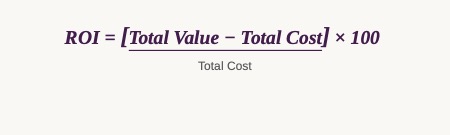
Where “Total Value” includes closed deals, pipeline value, and brand equity.
2. Defining Your Costs (The “i” in ROI)
Before you can calculate return, you need an honest accounting of investment. Many marketers forget to include “hidden” costs:
- Hard Costs: Floor space, booth design/shipping, electrical, Wi-Fi, and lead retrieval software.
- Travel & Expenses: Flights, hotels, and per diems for the staff.
- Opportunity Costs: The hourly value of your sales team’s time away from their desks.
- Marketing Assets: Collateral, digital ads for the event, and pre-show outreach.
3. Measuring the Return (The “R” in ROI)
In the digital age, we categorize returns into three distinct tiers:
Tier 1: Direct Sales Revenue
The simplest metric: Deals closed on the floor or within the first 30 days attributed directly to the event.
Tier 2: Pipeline Value (The Leading Indicator)
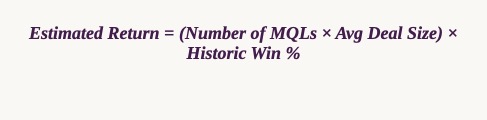
Because B2B cycles are long, your “Return” on day one is actually Pipeline Value. This is where high-quality lead capture becomes critical.
Tier 3: Cost-per-Acquisition (CPA) Efficiency
Compare your trade show CPA to your LinkedIn or Google Ads CPA. If a trade show lead costs $200 but converts at a 5x higher rate than a $50 digital lead, the trade show is actually the more efficient channel.
4. The Role of Digital Lead Capture
Accuracy in ROI is impossible without clean data. Digital lead capture (like ExpoWizard) ensures that leads are tagged with specific intent. Instead of a generic list, you have a segmented database that tracks:
-
Which products the lead was interested in.
-
Their timeline for purchase.
-
Their authority level.
This data flows directly into your CRM, allowing you to attribute revenue to the specific event 12 or 18 months down the line.
Pro Tip: Implement a “Control Group.” Compare the lifetime value (LTV) of customers met at trade shows versus those acquired through cold outreach. Often, the “handshake effect” leads to higher retention and larger upsells.
5. Moving Toward “Return on Objective” (ROO)
Sometimes the goal isn’t just revenue. If you are launching a new product, your “Return” might be:
- Brand Impressions: Total booth visitors vs. total attendees.
- Media Coverage: Interviews or mentions in industry publications.
- Partnership Development: Strategic meetings held in the booth.
Conclusion
Calculating trade show ROI in the digital age requires a shift from “How many leads?” to “How much value?”. By integrating your lead capture data with your CRM and accounting for both immediate wins and long-term pipeline, you can turn your trade show presence from an expensive gamble into a predictable growth channel.